Reference
Related works
- Visual SLAM
- Deep Learning
DROID
Abstract
Estimate the trajectory of the camera and build a 3D map Differentiable Recurrent Optimization Inspired Design it consists of recurrent iterative update
- high accuracy
- high robustness
- strong generalization (Zero-shot, can directly use stereo or RGB-D input)
RAFT
- iteratively updates optical flow
- operates on two frames
DROID-SLAM
- iteratively update camera poses and depth
- updates are applied to an arbitrary number of frames, enabling joint global refinement of all camera poses and depth maps, essential for minimizing drift for long trajectories and loop closures.
Dense Bundle Adjustment (DBA) layer
- differentiable
- computes a Gauss-Newton update to camera poses and dense per-pixel depth so as to maximize their compatibility with the current estimate of optical flow
- leverages geometric constraints, improves accuracy and robustness, and enables a monocular system to handle stereo or RGB-D input without retraining
Approach
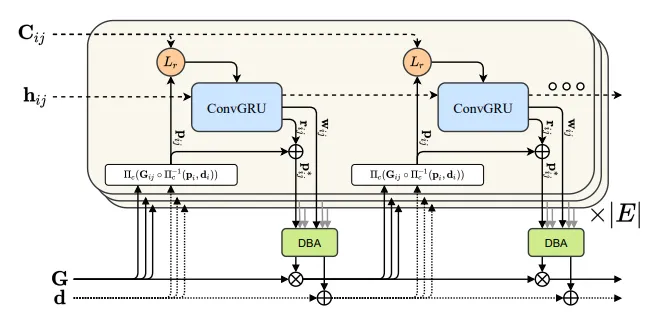
Figure 1. Illustration of the update operator
Feature Extraction and Correlation
6 residual blocks and 3 downsampling layers producing dense feature maps at 1/8 the input image resolution
two separate networks to extract features (similar to RAFT)
- a feature network: to build the set of correlation volumes
- a context network: are injected into the network during each application of the update operator
Frame Graph
adapt a frame-graph to represent co-visibility between frames An edge means image and have overlapping fields of view which shared points. The frame graph is built dynamically during training and inference. After each pose or depth update, can recompute visibility to update the frame graph. If the camera returns to a previously mapped region, add long range connections in the graph to perform loop closure.
Correlation Pyramid & Lookup
For each edge in the frame graph, compute a 4D correlation volume by taking the dot product between all pairs of feature vectors. Then perform average pooling of the last two dimensions of the correlation volume following RAFT to form a 4-level correlation pyramid. The lookup operator takes an grid of coordinates as input.
쉽게 말해, 첫 번째 이미지의 특정 픽셀이 두 번째 이미지의 어느 위치로 이동했는지 (매칭 확률) 를 3차원 데이터로 매핑해두는 과정입니다. 카메라의 위치가 변함에 따라 픽셀이 이동하는 궤적을 추적하는 핵심 단서가 됩니다.
Update Operator
Core Component The update operator = convolutional GRU with hidden state operator updates the hidden state a pose update, depth update Pose and depth updates are applied to the current depth and pose estimates. Iterative applications of the update operator produce a sequence of poses and depths.
Inputs
Correspondence field to index the correlation volumes To derive optical flow
- use correspondence field induced by camera motion as the difference .
- the residuals from the previous BA solution is concatenated with the flow field, allowing the network to use feedback from the previous iteration.
use to perform lookup from the correlation volume to retrieve correlation features. The correlation features provide information about visual similarity in the neighborhood of allowing the network to learn to align visually similar image regions. The flow provides an complementary source of information allowing the network to exploit smoothness in the motion fields to gain robustness.
Update
Context Network Context features GRU averaging the hidden state across the spatial dimensions of the image Global Context additional input to the GRU Incorrect correspondences can degrade the accuracy of the system. It is important for the network to recognize and reject erroneous correspondences. The GRU produces an updated hidden state
- [c] predict updates to the depth or pose directly (X)
- [p] predict updates in the space of dense flow fields (O)
Output
- A revision flow field , a correction term predicted by the network to correct errors in the dense correspondence field
- Associated confidence map
DBA (Dense Bundle Adjustment)
DBA maps the set of flow revisions into a set of pose and pixelwise depth updates
- : Mahalanobis distance, weights the error terms based on the confidence weights an updated pose and depth (reprojected points match the revised correspondence as predicted by the update operator.)
- Gauss-Newton Algorithm: (Non-linear) Taylor expansion (Linear) solve for updates
- Hessian matrix: block diagonal structure, 근사행렬
- Schur Complement: 고속 연산을 위한 수학적 트릭